
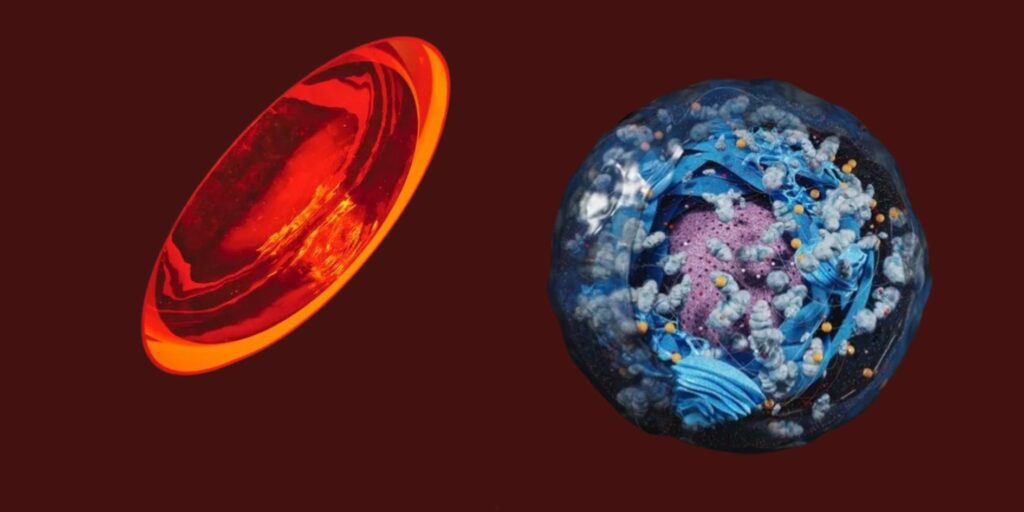
A complete explanation of the photobiomodulation mechanism — from photon absorption through to ATP synthesis, nitric oxide signaling, gene expression, and the biphasic dose response
When a red light therapy session begins, the visible result is straightforward: a panel of LEDs emitting red and near-infrared light. What happens next — at the cellular level, inside the mitochondria, across the nervous system and connective tissue — is considerably more complex and considerably more interesting than the marketing language typically suggests.
This article is a full-depth explanation of how photobiomodulation (PBM) actually works. It covers the primary mechanism (cytochrome c oxidase and ATP production), the secondary signaling cascades (reactive oxygen species, nitric oxide, calcium flux), and the more sophisticated downstream effects (retrograde mitochondrial signaling, gene expression, and the biphasic dose response). It is written for anyone who wants to understand the science — not just the headline claims.
For a broader overview of clinical applications and benefits, see our Benefits of Red Light Therapy guide. For the full technical science reference, see our Science page.
Brief History: From a Hungarian Laboratory to Your Living Room
Photobiomodulation has a longer scientific history than most people expect. In 1967, Hungarian physician Endre Mester at Semmelweis University was investigating whether lasers could cause cancer in mice. In the course of those experiments, he made an accidental observation: low-level laser radiation stimulated hair growth and accelerated wound healing rather than causing harm. This discovery shifted scientific attention from the destructive potential of high-powered lasers to the stimulatory potential of low-power light — the foundation of what we now call photobiomodulation.
Two decades later, NASA’s research in the 1990s provided a second major impetus. Scientists developing systems for plant growth in space observed that red light not only supported photosynthesis but also accelerated wound healing in astronauts. In microgravity, cellular regeneration and muscle maintenance are impaired; NASA demonstrated that controlled red light exposure could restore these processes without pharmacological intervention. The technology moved into mainstream clinical research shortly afterward.
Today, the scientific literature on photobiomodulation encompasses thousands of peer-reviewed studies across dermatology, musculoskeletal rehabilitation, neurology, and immunology. The mechanism is no longer debated — it is understood at the molecular level. What continues to evolve is the clinical application: optimal dosing, wavelength selection, and the expanding range of conditions that benefit from treatment.
The Optical Window: Why 600–1100 nm?
Not all wavelengths of light penetrate biological tissue equally. The « optical window » is the spectral range — approximately 600 nm to 1100 nm — in which the three primary light-absorbing chromophores in human tissue (water, melanin, and haemoglobin) have their minimum absorption. Outside this window, light is absorbed and scattered before it can reach the cells that need it.
Within the optical window, different wavelengths penetrate to different depths and activate different chromophores:
| Wavelength | Colour | Tissue Depth | Primary Chromophore | Key Application |
| 630–660 nm | Red | Dermis (2–3 mm) | Cytochrome c oxidase | Collagen, skin repair, wound healing |
| 810 nm | Near-IR | Subcutaneous / brain | CCO + neural tissue | Transcranial, cognitive, anti-inflammatory |
| 830–850 nm | Near-IR | Muscle, joint (5–10 mm+) | Cytochrome c oxidase | DOMS reduction, musculoskeletal recovery |
| 1060 nm | NIR-II | Bone, cartilage (deep) | Collagen chromophore | Deep bone density, chronic tissue repair |
This wavelength specificity is why the choice of device matters. A panel emitting only at 660 nm and 850 nm covers the two most clinically studied peaks but misses the 810 nm transcranial window, the 1060 nm deep tissue range, and the 590 nm pigmentation-normalising wavelength. The ZenGlow W7 series uses seven independently controllable wavelengths from 480 nm to 1060 nm, allowing operators to dial in the spectral combination for the specific treatment goal. See: PRO 150 W7, PRO 600 W7, PRO 1200 W7.
The Primary Mechanism: Cytochrome c Oxidase and ATP Synthesis
The central engine of photobiomodulation is cytochrome c oxidase (CCO), also known as Complex IV — the terminal enzyme of the mitochondrial electron transport chain. Understanding why CCO is the key to red light therapy’s mechanism requires a brief detour into cell biology.
What cytochrome c oxidase normally does
The electron transport chain is the process by which mitochondria generate ATP from the electrons stripped from food molecules. Complex IV is the final step: it accepts electrons from cytochrome c and transfers them to molecular oxygen, producing water and — through the electrochemical gradient this creates — driving the synthesis of ATP.
CCO contains prosthetic heme and copper centres that exhibit specific absorption peaks between 620 nm and 850 nm — precisely the red and near-infrared range. This is not coincidental. It is why these wavelengths produce a biological effect and visible blue or green wavelengths at similar intensities do not.
The nitric oxide problem — and how light solves it
Under conditions of cellular stress, injury, chronic inflammation, or normal aging, nitric oxide (NO) accumulates and competes with oxygen for the binding sites on CCO. NO binds to these catalytic centres and inhibits them — suppressing electron transport, reducing the mitochondrial membrane potential (the electrochemical gradient that drives ATP synthesis), and effectively throttling the cell’s energy output.
When photons at the appropriate wavelengths are absorbed by CCO, they provide the energy required for photodissociation of NO — displacing the nitric oxide from its binding sites. This allows oxygen to bind immediately, electron transport resumes, and ATP production rises measurably. The cell’s energy supply is restored.
| The photodissociation mechanism in brief:1. Nitric oxide binds to CCO and suppresses cellular respiration under stress or aging conditions.2. Photons at 630–850 nm are absorbed by the heme and copper centres of CCO.3. The photon energy drives the release of nitric oxide from the binding site.4. Oxygen binds to CCO. Electron transport resumes. ATP synthesis increases.5. The freed nitric oxide enters the cytosol and acts as a signaling molecule — driving vasodilation and improved local circulation. |
The ATP increase: what it means in practice
The increase in cellular ATP availability has measurable downstream effects. ATP is the universal energy currency of the cell — it fuels protein synthesis, DNA repair, cell migration, membrane transport, and immune function. A cell with a restored ATP supply can do more of everything it is designed to do: repair faster, synthesise structural proteins more efficiently, and respond to inflammatory signals more effectively.
In concrete terms, this translates to accelerated wound closure, increased collagen synthesis in fibroblasts, faster muscle recovery after exercise, and improved nerve regeneration in damaged tissue — the clinical outcomes that the photobiomodulation literature consistently reports.
Secondary Mechanisms: The Signaling Cascade Beyond ATP
ATP restoration is the primary effect of photobiomodulation, but it initiates a broader signaling cascade that accounts for much of the therapy’s range of clinical effects. Three secondary mechanisms are particularly significant.
1. Mitohormesis — controlled ROS and adaptive response
Beyond ATP production, PBM induces a transient, controlled generation of reactive oxygen species (ROS) from the mitochondria. This may sound counterproductive — ROS are generally associated with oxidative stress and cellular damage. But at low levels, ROS function as signaling molecules rather than damaging agents. This phenomenon is called mitohormesis: a low-level stressor that triggers adaptive protective responses.
The controlled ROS burst activates two key transcription factors: nuclear factor kappa B (NF-kB) and activator protein-1 (AP-1). These regulate the expression of genes involved in cytoprotection, cell migration, and anti-inflammatory signaling. The result is a genuine upregulation of the cell’s own defence systems — not a suppression of inflammation by an external agent, but an activation of the cell’s intrinsic repair capacity.
2. Nitric oxide as a vasodilator and signaling molecule
The nitric oxide displaced from CCO does not simply disappear — it enters the cytosol and acts as a potent signaling molecule. It stimulates soluble guanylate cyclase to produce cyclic guanosine monophosphate (cGMP), which in turn activates protein kinase G. This pathway promotes the relaxation of vascular smooth muscle, producing local vasodilation — an improvement in blood flow, tissue perfusion, and oxygenation.
This vasodilation effect is the mechanism behind several of PBM’s most consistent clinical observations: the immediate improvement in skin tone and colour post-session, the accelerated delivery of nutrients and oxygen to healing tissue, and the enhanced clearance of metabolic waste products (including lactic acid and inflammatory cytokines) from exercised muscle.
3. Calcium flux and secondary messenger activation
PBM also triggers the release of sequestered calcium ions (Ca2+) from the mitochondria and from light-gated ion channels in the cell membrane (transient receptor potential, or TRP channels). Calcium is a ubiquitous secondary messenger — its release activates a broad range of intracellular signaling pathways involved in cell growth, apoptosis regulation, and immune function.
This mechanism connects the localised mitochondrial response to systemic cellular activity — explaining how a 10-minute light exposure can have effects that persist for hours and influence cell behaviour well beyond the treatment window.
Mechanism summary
| Mechanism | Molecular Event | Physiological Effect | Clinical Relevance |
| CCO absorption | NO photodissociation | Resumption of cellular respiration | Faster tissue repair, restored energy output |
| ATP production | Increased electron transport | Higher cellular energy availability | Protein synthesis, DNA repair, cell proliferation |
| ROS generation | NF-kB and AP-1 activation | Upregulation of antioxidant and protective genes | Anti-inflammatory, cytoprotective response |
| NO release | cGMP / protein kinase G pathway | Vasodilation, improved circulation | Nutrient delivery, waste clearance, skin glow |
| Ca2+ flux | TRP channel activation | Broad intracellular signaling | Immune modulation, apoptosis regulation |
Retrograde Mitochondrial Signaling: How Local Light Produces Systemic Effects
One of the more sophisticated aspects of photobiomodulation — and one that is rarely explained in consumer-facing content — is the concept of retrograde mitochondrial signaling: the process by which changes in mitochondrial status communicate with the cell nucleus to alter gene expression.
Normally, information flows from the nucleus outward — the nucleus sends instructions to the rest of the cell. Retrograde signaling reverses this: the mitochondria send signals back to the nucleus, reporting on their energy status and triggering adaptive gene expression in response. In the context of PBM, the ATP increase and ROS burst produced in the mitochondria alter the cell’s intracellular redox potential, pH levels, and cyclic AMP (cAMP) concentration. These changes are detected by nuclear transcription factors, which then activate genes related to:
- protein synthesis and structural repair
- antioxidant enzyme production (superoxide dismutase, catalase)
- anti-apoptotic responses (reduced programmed cell death)
- inflammatory cytokine regulation (reduced IL-1beta, TNF-alpha, IL-6)
This mechanism explains something that users of red light therapy often notice but find difficult to explain: that the effects of a session seem to extend well beyond the treatment area, and well beyond the session itself. A 15-minute panel session over the chest can influence cellular activity throughout the body — because the retrograde signal travels through the circulation and reaches distant cells.
It also explains the cumulative nature of PBM benefits: with repeated sessions, gene expression patterns shift in a sustained way, building an increasingly robust anti-inflammatory and pro-regenerative cellular environment. This is why consistency matters more than session length in photobiomodulation protocols.
The Biphasic Dose Response: Why More Is Not Always Better
One of the most important — and most commonly misunderstood — principles in photobiomodulation is the biphasic dose response, also known as the Arndt-Schulz Law. The principle is straightforward: low to moderate doses of light stimulate biological function; high doses inhibit it or provide no benefit.
This has direct implications for how RLT devices should be used. Unlike many medical interventions, higher irradiance and longer sessions do not produce proportionally better outcomes. Above a certain threshold — typically cited as 60–100 J/cm² for most skin and muscle applications — the therapy can slow healing rather than accelerate it, trigger excessive ROS production, or simply produce no additional benefit.
Calculating your dose: the fluence formula
Therapeutic dose in photobiomodulation is expressed as fluence — energy density in joules per square centimetre (J/cm²). The formula is:
| Fluence (J/cm²) = Irradiance (mW/cm²) x Time (seconds) / 1,000The therapeutic window for most applications: 3–50 J/cm²Inhibitory threshold: >60–100 J/cm² |
| Irradiance | 5 min | 10 min | 15 min | 20 min |
| 20 mW/cm² | 6.0 J/cm² | 12.0 J/cm² | 18.0 J/cm² | 24.0 J/cm² (optimal) |
| 50 mW/cm² | 15.0 J/cm² | 30.0 J/cm² | 45.0 J/cm² | 60.0 J/cm² (upper limit) |
| 100 mW/cm² | 30.0 J/cm² | 60.0 J/cm² | 90.0 J/cm² | 120.0 J/cm² (inhibitory) |
The practical implication: at 100 mW/cm² (the irradiance of a professional-grade panel), a 10-minute session reaches 60 J/cm² — the upper boundary of the therapeutic window. A 20-minute session at the same irradiance pushes into the inhibitory range. The optimal session length for a high-power panel is shorter, not longer. Understanding your device’s actual irradiance — verified by spectroradiometry, not a marketing figure — is essential for staying within the effective range.
For guidance on verifying irradiance specifications and selecting a device based on real-world dose calculations, see our Red Light Therapy Buyer’s Guide.
From Mechanism to Outcome: What the Research Shows
Understanding the mechanism allows the clinical outcomes to make sense rather than appear as an arbitrary list of benefits. Each major application of PBM traces directly to one or more of the mechanisms described above.
Skin: collagen synthesis and anti-aging
The mechanism: ATP restoration in dermal fibroblasts fuels increased production of type I and type III collagen and elastin. Simultaneously, the anti-inflammatory signaling via NF-kB reduces the activity of matrix metalloproteinases (MMPs) — the enzymes that degrade existing collagen. The result is net collagen gain.
The evidence: a 2021 clinical analysis involving nearly 600 participants documented 67% reduction in fine line visibility, 58% improvement in skin firmness, 45% increase in dermal hydration, and 39% reduction in deep wrinkle depth after consistent red light exposure. These are not marginal improvements — they are measurable structural changes in the dermis.
See: Red Light Therapy for Skin: The Science Behind Radiant Results
Muscle recovery and athletic performance
The mechanism: NIR wavelengths (810–850 nm) penetrate deep into muscle tissue and activate CCO in muscle cells. The resulting ATP increase, combined with the vasodilatory effect of released NO and the anti-inflammatory action of NF-kB signaling, reduces the cytokine burden of post-exercise inflammation and accelerates the repair of micro-damaged muscle fibres.
The evidence: peer-reviewed research consistently shows 30–40% reduction in delayed onset muscle soreness (DOMS) in the 24–72 hours following training when PBM is applied pre or post-workout. Pre-application has also been linked to improved endurance, increased strength output, and delayed time to exhaustion.
See: Red Light Therapy for Athletes
Pain and inflammation
The mechanism: the anti-inflammatory cascade initiated by NF-kB and AP-1 activation downregulates pro-inflammatory cytokines including IL-1beta, TNF-alpha, and prostaglandins. The vasodilation effect improves clearance of inflammatory mediators from the affected area. These mechanisms work in a manner analogous to NSAIDs — but without systemic side effects.
See: Red Light Therapy for Pain and Inflammation
Brain and cognitive function (transcranial PBM)
The mechanism: the 810 nm wavelength is uniquely capable of penetrating the human skull. When applied transcranially, it activates CCO in neurons and glial cells, increasing neural ATP production, reducing neuroinflammation, and improving cerebral blood flow through the NO vasodilation pathway. Recent research at the University of Utah with collegiate football players found that NIR transcranial therapy protected against season-long brain inflammation in the treatment group — while the placebo group showed progressive accumulation of neuroinflammation across almost all brain regions.
Sleep and circadian regulation
The mechanism: PBM’s effect on the hypothalamus and pineal gland — which regulate circadian rhythm and melatonin production — appears to be mediated via the same CCO and NO pathways. Improved mitochondrial function in these regulatory tissues supports more consistent circadian signaling. Red light in the evening does not suppress melatonin production in the way blue light does, making it compatible with pre-sleep use.
See: Can Red Light Improve Sleep?
Frequently Asked Questions
Does red light therapy actually increase ATP production, or is that just a marketing claim?
It is a measured biological outcome, not a marketing claim. Controlled experiments on isolated mitochondria using 808 nm NIR light directly demonstrated enhanced Complex IV (CCO) activity and measurable ATP increases. The mechanism — photodissociation of inhibitory nitric oxide from CCO binding sites — is understood at the molecular level and has been replicated across multiple independent research groups.
Why does red light work but UV light does not?
UV light (wavelengths below ~400 nm) carries enough energy to break chemical bonds in DNA — this is why it causes sunburn and skin cancer. Red and near-infrared light (600–1100 nm) carries significantly less energy per photon and does not cause ionisation or DNA damage. Instead, it is absorbed by specific biological chromophores (principally CCO) and converted into biochemical signals. The therapeutic effect is driven by the molecular response of these chromophores, not by thermal or ionising damage.
Can you get too much red light therapy?
Yes — the biphasic dose response is real. At doses above approximately 60–100 J/cm², the stimulatory effect reverses and can become inhibitory. In practice, this means sessions that are too long or use devices with very high irradiance can reduce benefit. At 100 mW/cm² irradiance, 10 minutes delivers 60 J/cm² — the upper boundary. Most professional protocols recommend 10–20 minute sessions at moderate irradiance (50–100 mW/cm²) rather than very long sessions at maximum power.
How is red light therapy different from infrared sauna?
Infrared saunas primarily work through heat — far-infrared wavelengths raise core body temperature, producing benefits through thermal mechanisms (vasodilation, sweating, and heat shock protein activation). Red light therapy works through photochemistry — specific wavelengths interact with CCO and other chromophores to drive cellular responses that are independent of heat. The two modalities are complementary rather than interchangeable. See: RLT vs Infrared Sauna — What’s the Difference?
Does this work for everyone, or only certain people?
The primary mechanism — CCO absorption and ATP production — occurs in every human cell that contains mitochondria, which is essentially every cell except mature red blood cells. The therapy is therefore not specific to a particular demographic or health status. That said, individuals with photosensitising conditions or taking photosensitising medications (certain antibiotics, cardiac drugs, or retinoids) should consult a doctor before beginning. See our How to Use Red Light Therapy guide for protocol and safety details.
Explore ZenGlow’s Professional-Grade Panels
The science described in this article depends on receiving the right photons at the right dose. That requires a device that delivers verified irradiance at clinically meaningful wavelengths — not a consumer lamp with inflated marketing specifications. ZenGlow’s W7 panel range uses tightly binned Taiwan Epistar LEDs at 7 wavelengths from 480–1060 nm, with 30° beam optics that preserve irradiance at treatment distance, and third-party verified output figures.Explore the full range: zenglow.asia/shop. Or read our Buyer’s Guide to Red Light Therapy Devices for the specifications that actually determine therapeutic efficacy.